 Back
BackThere is an idea in crisis communications that saying nothing is the safest option. Sometimes it is. But silence can create space for others to tell the story, and you must decide whether you can live with their version.
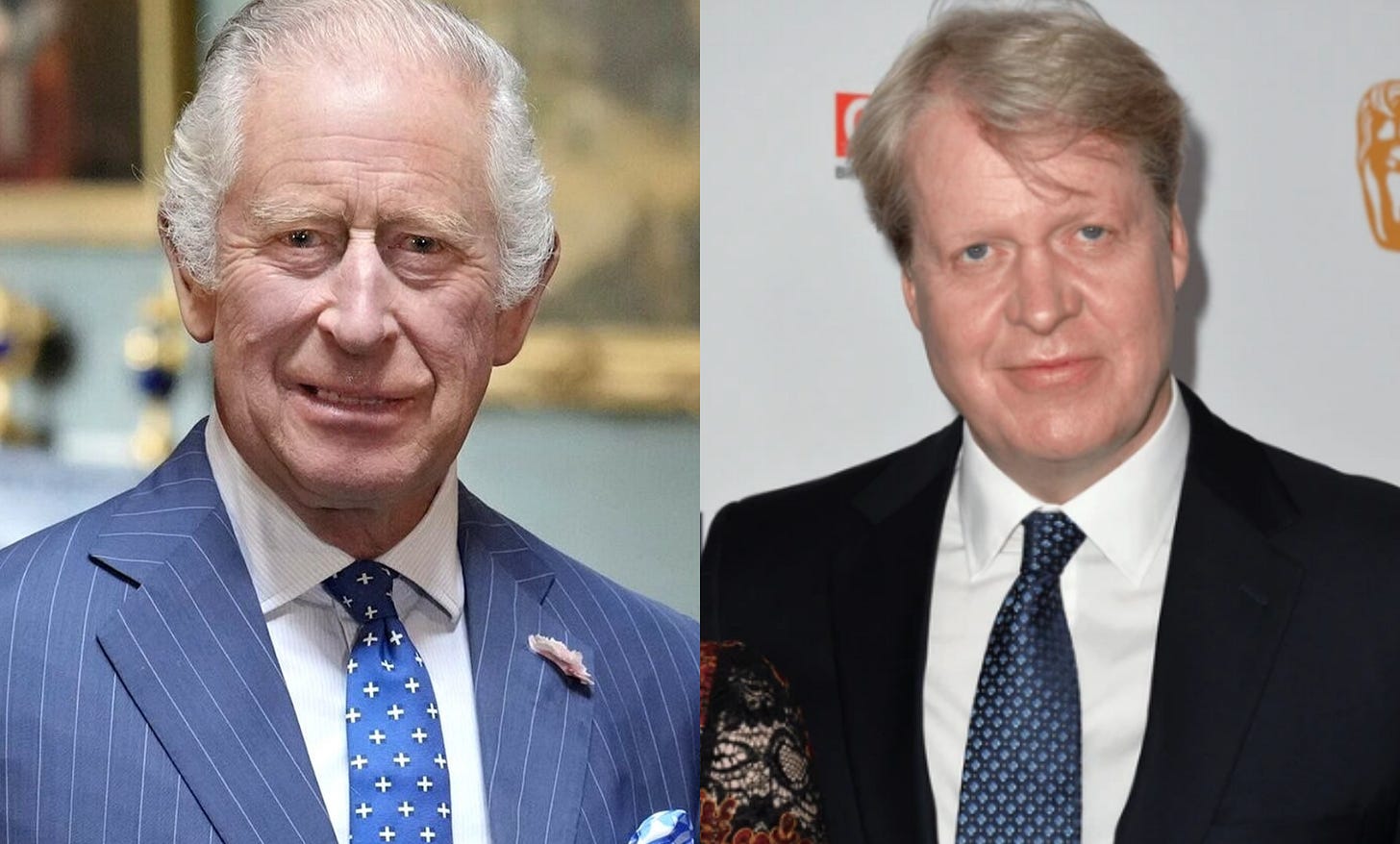
Buckingham Palace faced that conundrum this week after Earl Spencer made a shocking allegation about King Charles in his new memoir about Diana. The Palace chose to answer, breaking with its usual reluctance to comment on books and ensuring that its response became a story in its own right.
This week on When It Hits the Fan, David Yelland and I looked at why an organisation might knowingly give a story more attention by issuing a statement, what happens when private family disputes become public, and we look at the very different communications problem facing Ed Sheeran after controversy engulfed his North American tour.
When the Palace Answers Back
In Swan Song: Diana, My Sister, Earl Spencer gives his account of a heated telephone conversation with the then Prince Charles in the days after Diana’s death in 1997. Spencer says they argued over whether William and Harry, then 15 and 12, should walk behind their mother’s coffin, and alleges that Charles told him: “Rest assured, we’ll forget her soon enough.” Spencer has since publicly stood by his recollection.
Buckingham Palace responded with unusual firmness. “While we do not comment on books as a matter of principle,” its statement began, before saying that the King was mindful that “the pain of fraternal grief can cloud reason, affect judgment and colour memory in ways others do not recognise, even many years after such a loss.”
It is an extraordinary statement. It sounds almost compassionate on first reading, but look at what it actually challenges: Spencer’s reason, his judgment and his memory. The language of grief softens what is, in effect, a very firm challenge to his account. However, the Palace does not directly say the remark was never made, something Spencer himself seized upon when subsequently defending his version of events.
For the communications team, the decision to say anything carried an obvious cost. A statement from Buckingham Palace confers importance on a story. It generates another round of headlines and gives journalists something new to interrogate. In this case, it also gave Spencer another subject to discuss as publicity for his book gathered pace.
Had the Palace remained silent, Spencer’s account would have circulated without an authoritative response from the King. By intervening, it made the controversy bigger but also ensured that its response featured prominently in subsequent coverage. The allegation and the Palace’s challenge to Spencer’s recollection now travel together.
Communications is not always about making a story disappear. Sometimes you have to accept that it will travel and concentrate instead on making sure your response travels with it.
Spencer and the Palace are also playing by very different rules. Spencer can give interviews, defend his recollection and keep discussing the book. The King, as head of state, cannot sensibly engage in a running public argument with his former brother-in-law. Continued attention may help Spencer sell a new book; for the Palace, there is far more value in bringing the matter to a close.
I do wonder whether the statement was slightly too interesting for that purpose. If you want a rebuttal to be reported once and then disappear, boring language can be useful. This was pointed, almost poetic and sufficiently unusual to invite analysis of every word. It did the job of challenging Spencer’s account, but it also helped keep the story alight.
When Family Feuds Go Public
The Spencer dispute also brings to mind something I have encountered in a very different setting, when family feuds spill into businesses. I have advised families through disputes and turf wars involving considerable wealth, companies, and reputations, and once a private disagreement becomes public, the consequences become much harder to contain.
Executives can be pulled towards different sides, boards can become divided and a personal grievance can start affecting decisions that have very little to do with the original argument.
In family businesses, ownership and personal relationships are often intertwined. Succession can bring tensions that have been contained for years to the surface, and the temptation for one side to brief a journalist, publish an account or correct the public record can be enormous.
The difficulty is that going public changes the dispute itself. An argument between relatives becomes something strangers can watch and take sides on. Each new intervention creates pressure for an answer, and before long both parties can find themselves participating in a story neither fully controls.
That is why so much work in these situations happens away from public view. Keeping a disagreement private may look like inactivity from the outside, but sometimes the most useful communications advice is helping somebody resist the urge to have the last word.
When Every Answer Has a Cost

Ed Sheeran has faced a different problem on his North American tour.
The controversy began after Macklemore, one of his support acts, used performances at New Jersey’s MetLife Stadium to voice support for Palestinians and say “Free Palestine”.Objections followed from some of the venues scheduled to host later dates, and Sheeran said he tried to broker a solution before the promoter ultimately removed Macklemore from the remaining shows. Other support acts subsequently withdrew in protest.
Sheeran initially issued a statement setting out his account. Then at his Philadelphia concert on Saturday, he addressed the controversy again, apologised for mistakes and described the situation in Gaza as “catastrophic and unjustifiable”. He also said he was speaking to people across the spectrum and acknowledged that he did not know enough.
Watching him deliver that statement, I was struck by the attention paid to the fact that he appeared to be reading prepared words. In a crisis, we can become so preoccupied with finding precisely the right sentence that we underestimate how much delivery shapes the way it is received. Preparation is necessary, particularly on an issue this sensitive, but if it looks overly rehearsed it can create distance at the moment you most need people to hear you as a person.
Sheeran also illustrates how difficult reputation management becomes when different audiences expect incompatible things from you. Whatever he said was likely to disappoint part of his audience, while other people involved in the dispute were continuing to speak publicly.
There may be no statement capable of reconciling those positions. Both sides PR is becoming increasingly fraught and can end up alienating all sides.
For communications advisers, that creates a conundrum. You cannot write your way out of every crisis in one afternoon. Events are still moving, other people including fellow music celebrities are still speaking and something said today may need to survive developments you cannot predict tomorrow. Sometimes the sensible approach is to concentrate on the next decision you can defend rather than trying to design the perfect route back to normality. He is in PR free fall.
It also says something about the job PR practitioners now do. Geopolitical questions that might once have sat mainly with government or specialist corporate teams can arrive suddenly in a stadium, a sponsorship agreement or a consumer campaign. Advisers do not need to become foreign policy experts, but they do need enough understanding to recognise when an apparently straightforward commercial decision sits inside a much larger political and cultural argument.
Sheeran may now have reached the point where saying more simply creates another news event. All eyes are on the next PR battleground as he prepares to play at Robert Kraft’s stadium this Saturday. What he does next may matter more than finding another way to explain what has already happened.
Originally featured in Substack