 Back
Back“What if I have completely overestimated my capabilities? What if my story ends up being a cautionary tale like Icarus about flying too close to the sun?” – Jason Arday
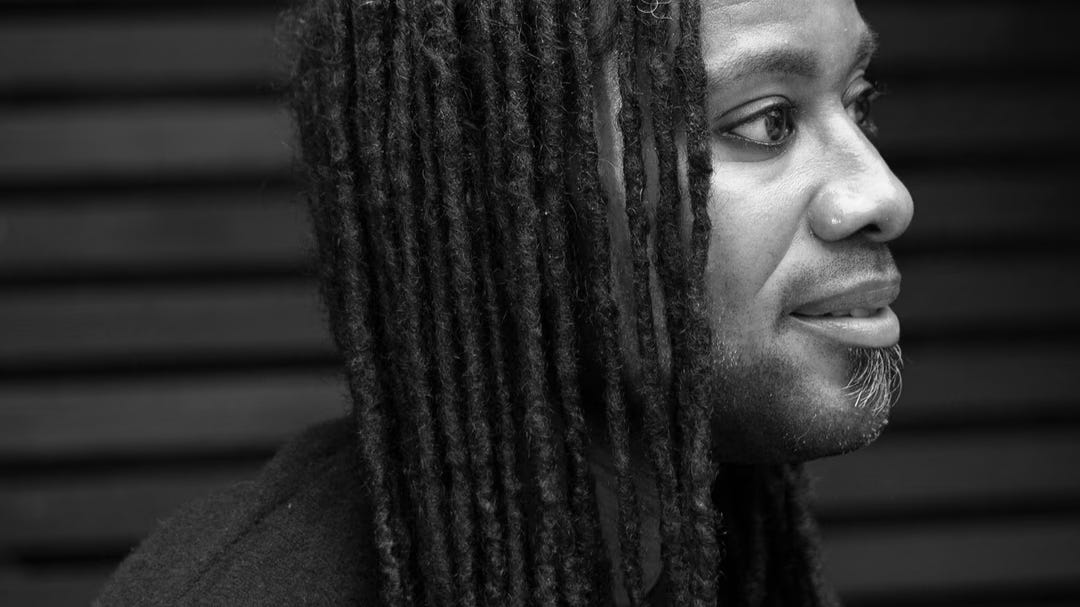
The Cambridge professor Jason Arday has resigned.
In 2023, at 37, he became the youngest Black scholar to hold a professorship at Cambridge. The appointment sent a jolt of pride through academia and well beyond it. It looked like proof that the old doors were finally opening.
Now his resignation sits at the centre of a very different story.
Nathan Cofnas first pushed the allegations into public view. He was sacked from his own Cambridge role in 2024 after his views on race, intelligence and diversity policy caused an outcry. He describes himself as a “race realist.” He says he found multiple instances of plagiarism in Arday’s academic work.
That context is important. It doesn’t mean the allegations should be waved away. Academic integrity is critical to academia. Merit hugely matters in our institutions and they owe the public due diligence, especially on appointments of this profile. Cambridge has reportedly been reviewing aspects of the case. Arday denies the allegations. If there are real questions about a PhD, published papers or institutional process, they deserve a proper, independent look. Nothing here is settled fact, and it shouldn’t be treated as such by anyone, on any side.
But how a story is pursued matters just as much as what it contains.
Higher education is already under pressure from every direction. Liverpool John Moores University, which awarded the PhD, and Cambridge, which made the appointment, both face fair questions about process and rigour. The public is entitled to expect exactly that from institutions built on intellectual authority.
What concerns me is the widening frame.
What began as questions about one man’s academic record has become something else. A proxy argument about diversity, about meritocracy and about who really belongs. The scrutiny has spread from Arday’s work to almost everyone standing near him, and the tone has grown punitive fast. The substance of the allegations deserves examination. The spectacle doesn’t deserve a pass just because it’s dressed up as accountability.
There’s a difference between the two. Accountability asks questions and waits for answers. Spectacle has already decided.
Some are now using this story as proof that DEI must go, full stop. That one contested case may mean to some that every senior appointment from a minority background is suspect until proven otherwise. That’s not scrutiny. That’s importing an American-style culture war into British institutions, case by case, until the exception becomes the rule.
I believe in meritocracy. I believe in excellence. Institutions built on those values benefit everyone, including the people they promote. Appointing someone because of their race rather than their ability is corrosive, whatever that person’s race happens to be. It damages trust. It weakens institutions. And it sets people up to fail and hurts them.
But there’s a second corrosion at work here too: the reflex that treats every senior minority professional as a diversity hire until they can prove otherwise.
Like many others, I have experienced this first-hand.
For years, whenever I walked into BBC Broadcasting House with a Curzon client, I felt something magnetic. I’d written on a wish list, so long ago I’d half forgotten it, that I wanted to present a show one day. My mother was one of the early women to broadcast in the English language on PTV, Pakistan’s state channel. Broadcasting had always lived somewhere in the back of my mind.
So when I was asked to present When It Hits the Fan on BBC Radio 4, I could barely believe it. It felt like the sum of years of graft, curiosity and thousands of small, unglamorous steps.
Then, scrolling through hundreds of generous messages, I found one from a stranger. They said I must have been a “woke DEI hire.“
One sentence. Years of long hours, hard-won skill and effort, reduced to the colour of my skin. That’s why this story sits uneasily with me.
We’re not yet where Martin Luther King hoped we’d be. I don’t want positive discrimination or negative discrimination on the basis of my skin colour. I want to be judged on merit, character and contribution, full stop.
As King said:
“I have a dream that my four little children will one day live in a nation where they will not be judged by the colour of their skin but by the content of their character.”
That’s still the aspiration worth holding onto.
The Arday story isn’t only about one career or one university’s governance. It’s about what people are trying to make it mean. If there’s been wrongdoing, address it properly. If institutions fell short, hold them to account. But don’t let one contested case become a licence to view every minority professional who fought their way through the door with permanent suspicion.
Meritocracy matters. So does fairness. And fairness means resisting the urge to turn due process into a public hanging, or one man’s fall into a verdict on everyone who looks like him.
A quick note for regular listeners: When It Hits the Fan is enjoying its summer break and returns to BBC Radio 4 in September. Until then, here’s a selection of ideas that have caught my attention.
The Danger of Yes People
Since joining the BBC Radio 4 family through When It Hits the Fan, I’ve been discovering more of the programmes that make it such a fascinating place for curious minds.
One I particularly enjoyed was my friend Matthew Gwyther‘s exploration of sycophancy. From the courts of kings and Machiavelli’s The Prince to today’s AI assistants, it examined why people, and increasingly technology, can be tempted to tell us what we want to hear rather than what we need to hear.
It reminded me that one of the greatest risks for any leader isn’t criticism. It’s losing access to honest counsel. So many powerful people are surrounded by ‘yes men or women’ and when their gatekeepers are all sycophants, its usually a slippery slope downwards.
Whether you’re running a business, advising clients or leading a team, the people around you shape the quality of your judgement. The best advisers aren’t there to flatter your thinking. They’re there to strengthen it.
The programme is well worth a listen.
Every Era Chooses Its Leaders
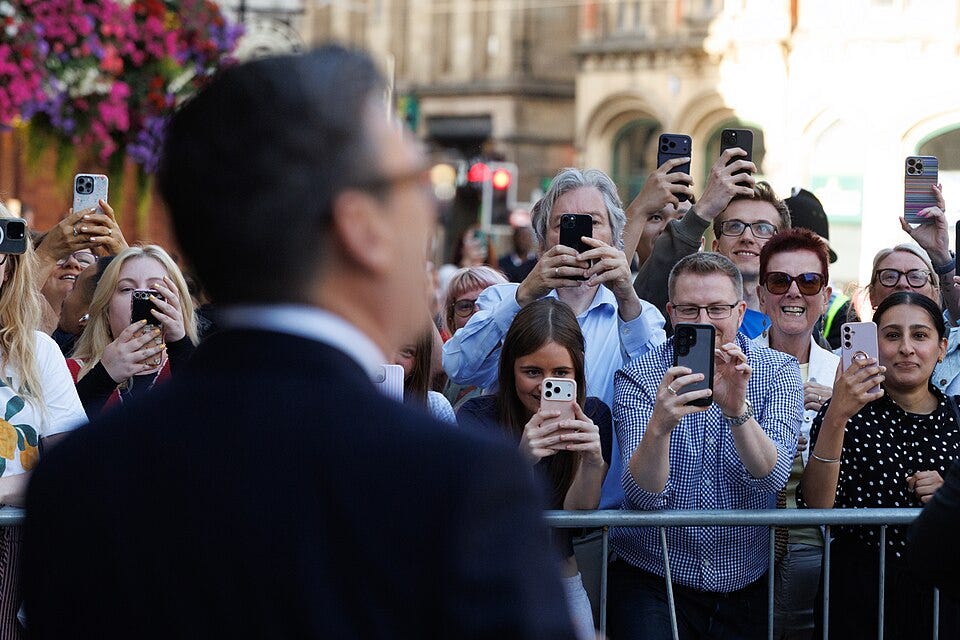
One LinkedIn post I particularly enjoyed this week came from Stephen Davies who asked whether Andy Burnham might become Britain’s first truly social media Prime Minister.
Stephen makes an observation I thought was particularly insightful. Every communications era rewards different kinds of leaders. Radio rewarded compelling voices. Television rewarded polished performers. Social media rewards visibility, responsiveness and participation.
Communications channels don’t simply change how leaders communicate. Over time, they shape the qualities we come to expect from leadership itself.
Stephen also points to an interesting argument made by Stephen Bush in the Financial Times, who questions whether a social media-first approach sits comfortably alongside Britain’s long-established rules on political advertising.
Whether or not Andy Burnham becomes Britain’s first social media Prime Minister remains to be seen. Stephen’s post, and Stephen Bush’s accompanying piece, are both well worth reading. I went on BBC News on Friday to talk about our PM’s penchant for social media, I am a fan for harnessing socials however I would like to see more interviews with trad media so the public know our politicians are being held to account.
Read the full post HERE
Building Bridges
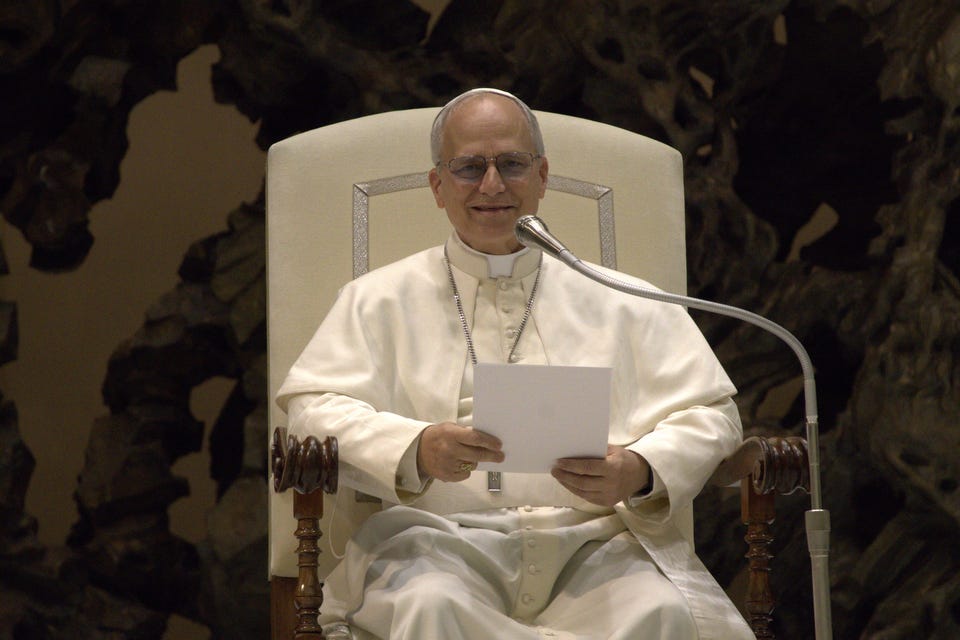
Speaking about the divisions shaping so much of public life, Pope Leo XIV spoke of the need for us to become “prophets of harmony” rather than amplifiers of conflict.
The phrase resonated deeply because it captures something we’ve believed at Curzon PR for nearly two decades. Our purpose is Connecting Worlds. We’ve always worked across cultures, borders and differing points of view. That isn’t always easy. In an increasingly polarised world, it’s often simpler to stay among people who already think as we do.
Today, people are often judged not only by what they believe, but by who they choose to work with, speak to or even listen to. Dialogue itself can sometimes be mistaken for endorsement.
I was reminded of a conversation I once had with Lord David Evans of Watford. As I shared my frustration with some of the divisions I was seeing, he gently encouraged me to replace judgement with curiosity. Behind many deeply held views, he suggested, lies fear, uncertainty or a feeling of being unheard.
I’ve found myself returning to that thought often. Building bridges doesn’t mean abandoning your principles. It means believing that understanding is usually a better place to begin than condemnation.
A hundred conversations
Communications Breakdown, hosted by Steve Dowling and Craig Carroll, is fast approaching its 100th episode.
It’s become one of my favourite podcasts because the most interesting conversations rarely happen between people who think alike. They happen between people who’ve taken very different paths and bring different perspectives to the table.
Steve’s experience leading communications at organisations including Apple and OpenAI, combined with Craig’s academic perspective, makes for discussions that are both practical and intellectually curious.
With a few episodes to go, they’re on the cusp of a milestone that relatively few podcasts ever reach. Most people give up early on as its hard to stay consistent and show up.
Congratulations to them both. You can catch the latest episode of Communications Breakdown here.
Opening Doors
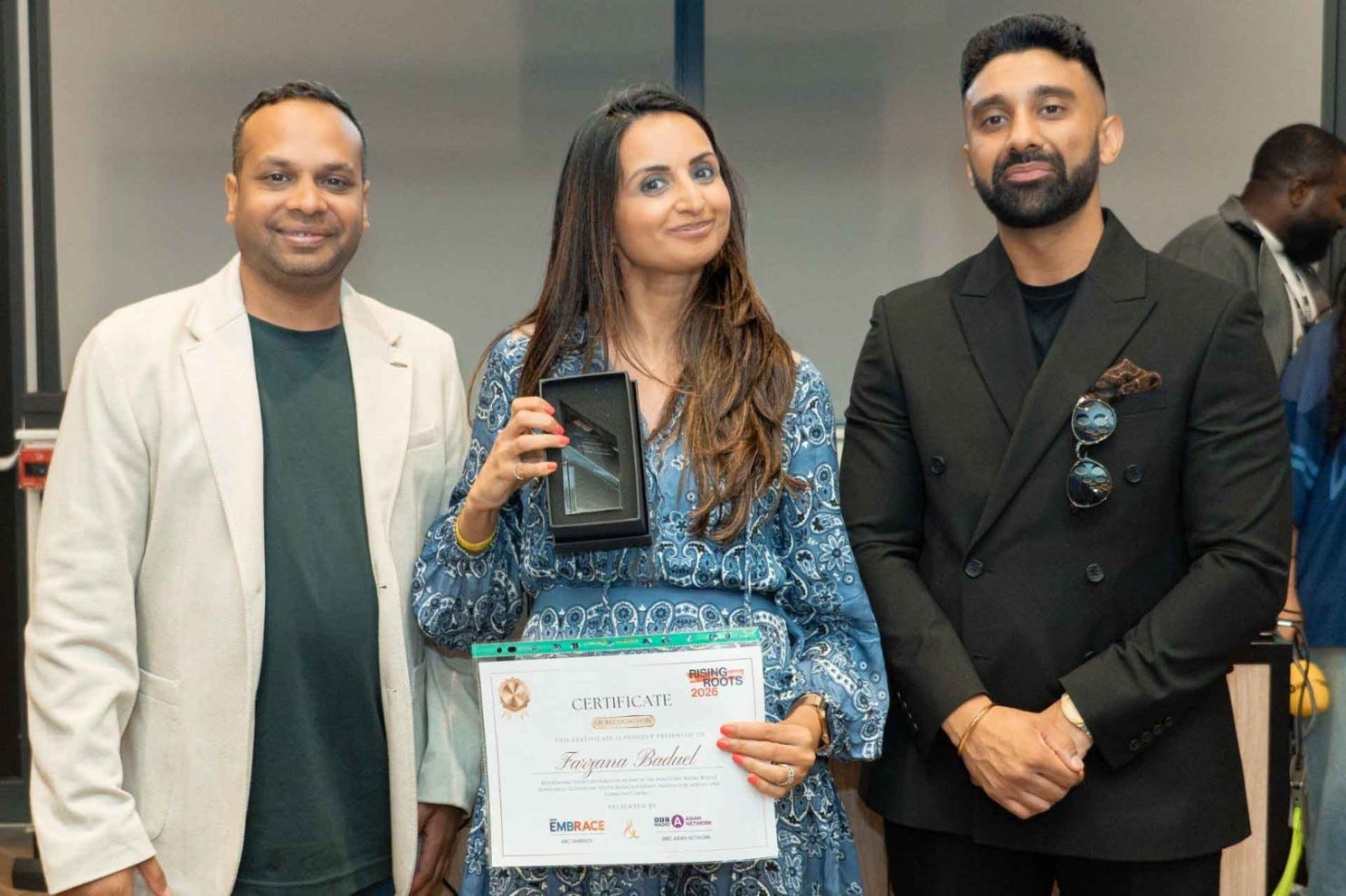
I was delighted to be recognised by BBC Embrace as part of the inaugural Rising Roots cohort during South Asian Heritage Month.
The recognition gave me an opportunity to reflect on something I wish I’d understood much earlier in my career. As a second-generation British Pakistani with family roots in Kashmir, I didn’t always see difference as an advantage. Over time, I came to realise it was one of my greatest professional strengths, helping me understand different perspectives and connect people across cultures.
It was a privilege to celebrate alongside so many inspiring people, including my good friend Sheeraz Gulsher of People Like Us and Hitan Mehta, the CEO of British Asian Trust .
Thanks to Edward Odofin (LL.B.) (PRINCE2) (CMP) (CBCI) (MoR), the BBC Embrace team, Ahmed Hussain and the BBC Asian Network, and, of course, the talented team at Curzon PR. Recognition like this is always shared.
PR Has Talent
One of the great pleasures of my work is being surrounded by talented people whose creativity extends far beyond communications.
My colleague David Olajide, for example, is a published poet whose love of language inspires many of the words we share with the world. He’s just one of countless people in our profession whose talents don’t appear on a LinkedIn profile or business card.
That’s one of the reasons Graham Goodkind and I created PR Has Talent, taking to the stage at Soho Theatre on 17 November in Soho. We’re looking for people across the industry with talents that deserve their own spotlight, whether that’s comedy, singing, magic or something completely unexpected. We already have an incredible list and want to hear from more talents.
I’m also delighted that the team at Frank has created a brilliant new identity for the show. We’ll be announcing our judges, ambassadors, performers and ticket details over the coming weeks.
All proceeds will support Soho Theatre’s new writing programme. I am a trustee of Soho Theatre and will be heading to Edinburgh fringe next week to see their work in action.
If you’d like to take part, or know someone who should, email ThePRoducers@PRHasTalent.co.uk or send Graham or me a message.
Until next week,
Farzana
Originally featured in Substack