 Back
Back“The real voyage of discovery consists not in seeking new landscapes, but in having new eyes.“ – Marcel Proust
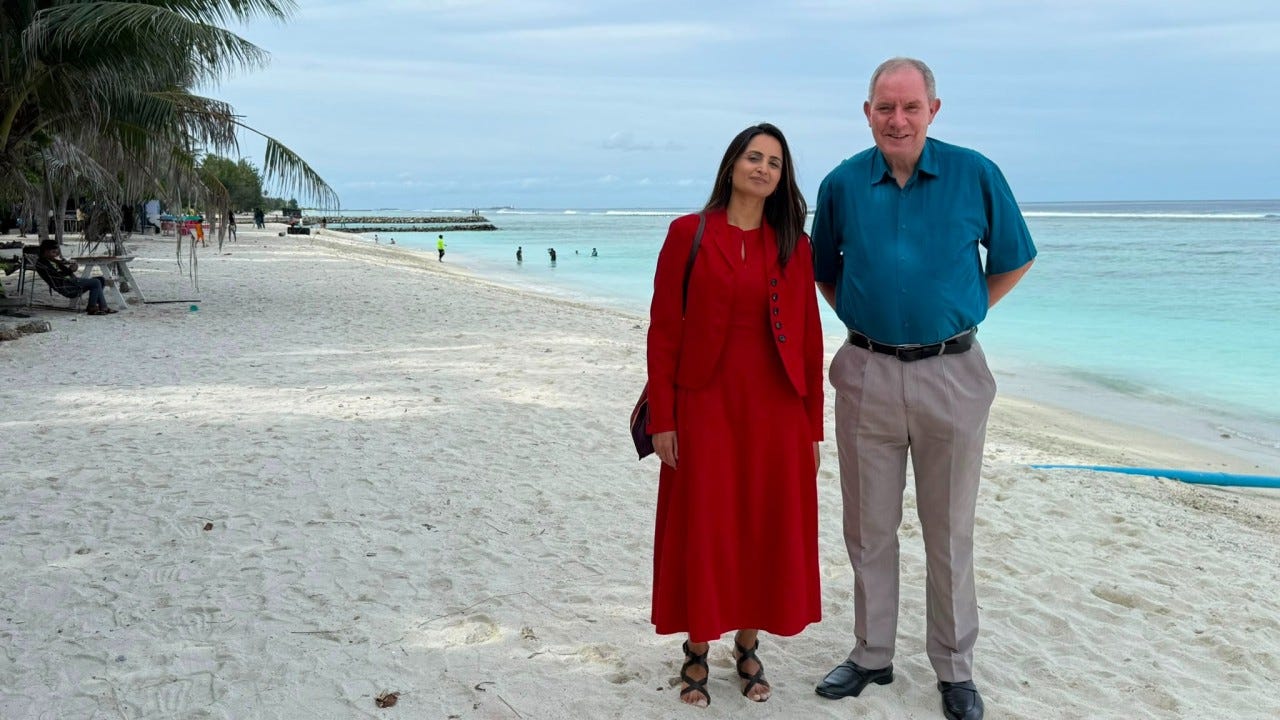
Hello from Malé, the capital of the Maldives.
The Maldives is made up of around 1,200 islands, but Malé offers a very different picture from the one most of us associate with the country. It is compact, densely populated and full of life. I’ve enjoyed seeing another side of a place whose international reputation is so often defined by its beaches and resorts.
I’m here for a few days of meetings and conversations, and I’ll have more to share about the Maldives soon.
For now, there is plenty to talk about closer to home.
Remembering Jason Arday

A few weeks ago, I wrote here about Professor Jason Arday and the intense public scrutiny surrounding him. I never imagined that I would be returning to his story so soon, and in such desperately sad circumstances.
Jason died recently at the age of 41. My deepest condolences go to his family, friends, students, colleagues and everyone who loved him.
There were legitimate questions being asked about elements of Jason’s academic work and public biography, and journalism must always be free to investigate matters in the public interest. But his death has also forced a difficult and necessary conversation about proportionality.
The sheer volume and intensity of the coverage he faced was extraordinary. What happens when scrutiny of someone’s work becomes scrutiny of almost every aspect of their life? At what point does the person at the centre of the story disappear behind the headlines?
Those questions are now being asked far beyond social media. More than 50 MPs and peers have written to the press regulator IPSO calling for an investigation into the coverage, while there are growing calls for a wider inquiry into the conduct and culture of the press.
For those of us who work in communications and media, the questions are uncomfortable but important. Accountability matters. So does proportionality.
There are now several ways to support Jason’s family and the calls for greater scrutiny of what happened. Good Law Project is calling for a public inquiry, while Hacked Off and 38 Degrees are campaigning for an inquiry into the culture and behaviour of the press. Professor Sir Patrick Vernon OBE FrHistS has also established a fundraiser, with the support of Jason’s family, to help with funeral, memorial and associated costs.
Support the call for an inquiry: Good Law Project campaign
Sign the Hacked Off / 38 Degrees petition: Demand an inquiry into the culture of the press
Support Jason’s family: Professor Jason Arday Family Fund
Tales from the Lobby

I have been listening to Tales from the Lobby, Michael Crick ’s BBC Radio 4 series first broadcast in 2019. It is well worth revisiting. Among its contributors are former CIPR President Lionel Zetter and Iain Anderson FRSA, who received the CIPR’s Sir Stephen Tallents Medal in 2024.
The final episode explores lobbying during the political upheaval of Brexit. Seven years later, political instability has become a familiar challenge for anyone working in public affairs. Andy Burnham is now Britain’s seventh Prime Minister since 2016. Every change at the top brings a new Cabinet, new advisers and shifting priorities. Practitioners have to map and remap stakeholders, build and rebuild relationships, and keep pace as the political landscape changes around them.
What should remain constant is transparency. Jon Gerlis Chart.PR and the Chartered Institute of Public Relations have been making that case for years, arguing for lobbying rules that capture activity more broadly rather than focusing narrowly on consultant lobbyists.
The political players may keep changing, but the standards expected of those seeking to influence them shouldn’t.
Listen: Tales from the Lobby on BBC Sounds
The Age of the Tech Manifesto

The leaders of some of the world’s biggest AI companies aren’t just building technology. Increasingly, they’re writing manifestos about the future they believe it will create.
Mark Zuckerberg, Sam Altman and Dario Amodei have all published lengthy essays setting out their visions for AI, from its economic potential to the risks it might pose.
There’s an interesting communications question here. As public anxiety grows around jobs, safety and the environmental impact of AI, these executives aren’t simply explaining their technology. They’re trying to shape how we think about the future it represents.
Corporate leaders have always tried to influence public debate. But when your decisions could help determine how a technology as consequential as AI develops, the manifesto starts to look like more than thought leadership.
Who gets to write the story of our technological future, and how much should we trust the people building it to tell it?
Read the BBC story here.
The New Geography of Soft Power

I enjoyed John Arlidge‘s piece in The Sunday Times on the extraordinary global rise of Korean and Japanese culture.
From BTS and Squid Game to manga, literature, fashion and food, cultural influence that once travelled predominantly from West to East is increasingly moving in both directions.
South Korea’s story is particularly interesting. After the 1997 Asian financial crisis, the country deliberately invested in its creative industries as part of a strategy to diversify its economy. Nearly three decades later, Korean culture has become one of its most recognisable global exports.
For countries thinking about their international reputation, there is a lesson here. Soft power isn’t built only through governments and diplomats. It travels through the music people listen to, the programmes they watch, the food they eat and the stories they choose to share.
John’s piece is well worth reading here.
When Policy Finds a Rhythm
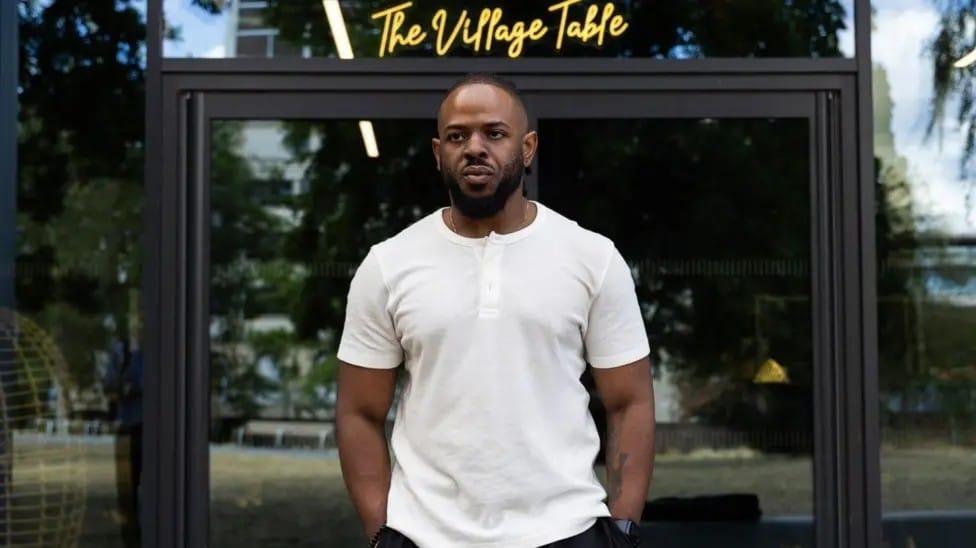
I enjoyed this story about Jenniah Brown, a poet and rapper in Croydon who is turning council policy into rap and spoken word.
Jenniah previously worked at Croydon Council and has now secured Arts Council England funding for Connecting Dots, a programme using performance and discussion to help people, particularly younger audiences, understand public policy.
His observation is a good one. Much of the information councils want people to understand is already publicly available. The problem is that too few people can make sense of it, or feel sufficiently interested to engage with it.
We often assume that making information public means we have communicated it. It doesn’t. Whether rap is the answer to every council consultation is another question! But finding language and formats that people actually want to engage with seems a pretty good place to start.
What Comms Can Learn From Comedy

I enjoyed John Harrington‘s piece in PRWeek on why comedians often make surprisingly effective communicators.
His examples range from Count Binface and Mo Gilligan to Joe Lycett and, perhaps most strikingly, Volodymyr Zelenskyy.
Comedy teaches you to read a room, anticipate the audience and think on your feet. It also forces you to get to the point. As John observes, that’s almost the opposite of the jargon-filled corporate statement or political word salad we’re all too familiar with.
Perhaps communications training could do with a little more comedy.
Read John’s piece in PRWeek here.
When It Hits the Fan remains on its summer break. David Yelland and I will be back on BBC Radio 4 in September.
Until next week, Farzana
Originally featured in Substack